
What symptoms can Traditional Chinese Medicine treat?
Traditional Chinese Medicine (TCM) is thousands of years old and the basic concept is that Qi (the vital force of life) surges through the body. Any imbalance to Qi can cause disease and illness. Ancient Chinese believed that humans are interconnected with nature and are subject to its forces. TCM treatment seeks to restore this balance through treatment specific to the individual.
TCM offers effective treatments for a diverse array of health disorders. Additionally, it can play a vital role in promoting general health maintenance and disease prevention. By fortifying and improving the normal body functions, it boosts the immune system and fosters an overall sense of well-being.
TCM is a valuable complement to modern medicine, recommended by medical professionals who value its emphasis on promoting health, balance and wellness.
Below are several symptoms and diseases that can be effectively treated with TCM :
Pain
- Headache
- Backache
- Shoulder and arm pain
- Leg pain
- Knee pain
- Ankle pain
- Neck pain
- Abdominal pain
- Menstrual and gynecological pain
- Fibromyalgia
- Rheumatoid arthritis pain
- Osteoarthritis pain
- Facial pain
- Pain between the ribs
- Chest pain
- Breast pain
- Tailbone pain
- Pains in the vertebrae etc.
Digestive system
Are you tired of feeling constantly bloated, dealing with annoying constipation, or battling with heartburn? Say goodbye to the discomfort caused by irritable bowel syndrome (IBS) and embrace a healthier lifestyle. Don’t let obesity, excessive appetite, and loss of appetite dictate your life. It’s time to take control and start feeling your best!
Gynecological problems
Women’s health covers many important topics that are essential for the overall well-being of women of all ages. To maintain reproductive health, It is important to understand and deal with issues related to menstruation, such as irregular periods, heavy bleeding, or severe cramps. Premenstrual syndrome (PMS) affects women’s physical and emotional health, and needs comprehensive support. It’s also important to address chest problems, including breast health, for early detection and management of any issues.
Loss of libido, which means reduced sexual desire, and leucorrhea, marked by vaginal discharge, can have different causes, and affect relationships and overall well-being.
Understanding and managing menopausal symptoms, such as hot flashes, mood changes, and hormonal shifts, is fundamental in supporting women through this natural phase of life.
Assisting fertility counseling processes (IVF, IUI, ICSI).
Allergies
People experiencing hay fever may also be sensitive to dust mites, pets, pollen, and certain foods.
Mind and mood issues
In recent years, more and more people have mental diseases, such as depression, anxiety, mania, stress, obsessive-compulsive disorder, and so on. Acupuncture treatment for those issues is an ancient and effective method. It works by regulating neurotransmitter levels, the neuroendocrine axis, and improving neuroplasticity. It also has anti-inflammatory effects, and can improve the emotional state.
Respiratory problems
Such as shortness of breath, coughing, chronic bronchitis, and asthma.
Modulate cardiovascular function
For the past 20 years, the lab of School of Medicine, University of California, has focused on understanding how acupuncture affects blood pressure. They have uncovered four key findings. First, acupuncture has specific effects on different points in the body that influence the heart and blood vessels. Second, various parts of the central nervous system receive signals from acupuncture and help regulate blood pressure. Third, repeated acupuncture can have long-lasting effects on cardiovascular function. Finally, acupuncture’s impact on blood pressure can vary depending on the individual and their neural pathways. This research suggests that acupuncture could be a valuable tool for regulating cardiovascular function in conditions like high blood pressure. READ MORE
Autoimmune disorders
Acupuncture can help regulate the immune system and reduce inflammation, which can improve autoimmune symptoms. It can also help treat pain common in people with autoimmune conditions.
Immune system regulation.
Acupuncture’s ability to boost the body’s defense mechanisms is strongly linked to the immune system’s role in protection, balance, and monitoring. Numerous studies show that acupuncture can adjust immunity, such as enhancing anti-cancer and anti-stress immune responses, as well as producing anti-inflammatory effects. This could form the foundation of acupuncture’s role in preventing and treating various illnesses.
Insomnia
Acupuncture is commonly used to treat insomnia in China: studies show that acupuncture can decrease anxiety, stimulate melatonin production, induce sleep, and reduce sleep disruption. It is a safe and drug-free treatment for insomnia.
What treatments are used in TCM?

Acupuncture
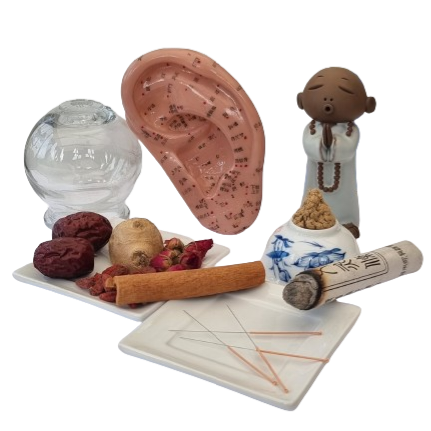
Acupuncture is one of TCM’s approaches to create harmony between yin and yang, and to restore correct flow of energy through the meridians. The use of acupuncture on certain points within the meridians improves the flow of blocked or stagnant Qi.
The practice of acupuncture includes inserting paper thin needles into the skin on certain points of a meridian. The acupuncturist manipulates the needle to stimulate the flow of Qi in the meridians to gain an effect called “de Qi”. This can restore movement of Qi and blood , reduce pain, improve organ function, and make the mind clear.
Auricular acupuncture
Auricular acupuncture is a diagnostic and therapeutic system that normalizes body functions by stimulating specific acupuncture points on the ears. It is a micro-acupuncture technique, similar to reflexology. Short thin needles are inserted at specific points on the outer ear to control pain and other symptoms.
It was used in ancient Egypt, Rome, Greece, and the entire Mediterranean area. In ancient China, the TCM bible – 黄帝内经 (The Yellow Emperor’s Inner Classic) documented the relationship between the ear and channels, or viscera, disease diagnosis through auricular inspection, and treatment of twitching by bleeding the back of ears. Another work: 千金翼方(A Supplement to Recipes Worth a Thousand Gold) recorded the contents and locations of auricular points, and the Yang wei Vessel on the back of the ears.
Cupping Therapy
Cupping is an ancient form of Traditional Chinese Medicine. It involves creating suction on the skin using a glass, bamboo or ceramic cup. In China, 2 different techniques are known: dry and wet cupping. During dry cupping, your therapist will set a small amount of a flammable substance on fire. As the fire goes out, the air inside the cup cools down and it creates a vacuum. This causes your skin to rise and redden as your blood vessels expand.
In China, people get it for many purposes, including to help with pain, to get out of dampness, to increase blood flow, to unblock a local area, for relaxation and well-being, and as a special type of deep tissue massage.
Acupressure and Tui na
Acupressure is an ancient form of massage that is one of the treatment methods used in Traditional Chinese Medicine. The goal of acupressure is to encourage the movement of Qi and blood. It works on the same energy meridians and acupoints as acupuncture. Acupressure consists of pressing the acupuncture points to help the free flow of Qi in meridians. It is similar to acupuncture, but a therapist uses their fingers instead of needles to work on the acupoints. it is ideal for self-care (under professional guidance), and for people who are afraid of needles.
Tui na is the most popular form of acupressure performed in China. An qiao is another form of acupressure which uses very light pressure, applied only with the fingertips.
Gua sha
Gua sha, literally translated as “to scrape petechiae” (rash-like dots) is a traditional Chinese healing method in which a therapist uses a smooth-edged tool, repeating pressured strokes over lubricated skin. This motion raises small, red, rash-like dots, that show under your skin.
In China, we believe this process helps blood flow, and creates a “cleansing” effect on your skin, which may help reduce toxins in your body, and promote the healing process.
Moxibustion or Moxa
Moxibustion is another therapeutic method in Traditional Chinese Medicine. It involves burning moxa (dried and ground mugwort leaves) to warm acupoints and relieve a variety of conditions. Mugwort, or artemisia, is a flowering plant in the daisy family. It is used in food eaten all around the world. There are a few different techniques: moxibustion can be applied directly or indirectly.
In China, we believe Mugwort can travel through meridians, which carry Qi throughout the body. Therefore, it can help regulate Qi and blood, dispel cold, warm yang, and prevent diseases to maintain overall well-being.
Herbal medicine
Chinese herbal medicine uses specific herbs to improve health. Chinese herbalists don’t treat individual symptoms or diseases, but the entire human body. It is rooted in the concept of pattern differentiation, which involves identifying the entirety of a person’s signs and symptoms: head-to-toe.
Chinese herbal medicine can be powerful when it is applied accurately. However, some Chinese herbal products may have been contaminated with toxic compounds, heavy metals, pesticides, and microorganisms, that may have side effects.
Food healing
In Chinese culture, “药食同源“(yao shi tong yuan) is a concept of using food as medicine. In the book of “伤寒论”(“Treatise on Cold Damage Diseases”) it is considered one of the four canonical works of Traditional Chinese Medicine. More than half of herbal formulas contain foods such as cinnamon, ginger, dades, peppercorn, fava beans, fennel, licorice, and even rice wine and vinegar.
In traditional Chinese Medicine, herbs or food are divided into four natures, called “四气”(four Qi): cold, cool, warm and hot. The nature of food is not determined by its actual temperature, but rather by what effect it has on a person’s body after consumption. When someone continually eats one type of food, it creates an imbalance in their body, and affects their immune system. Thus, one of the keys in Traditional Chinese Medicine is to keep our body “neutral.” READ MORE
Movement and Qi gong
Qi gong is a meditative movement and therapeutic exercise which was developed in China thousands of years ago as part of Traditional Chinese Medicine. It focuses on achieving balance and harmony in life through Qi cultivation for optimal health, healing, and longevity. It involves using hand postures, movements, and breathing, to optimize Qi within the body, mind, and spirit, with the goal of improving and maintaining health and well-being. This Qi is believed to be the force that moves blood. When Qi is increased, a person quickly feels warmer and their blood circulation improves.
There are a few well-known Qi gong practices, such as 八段锦(Baduanjin), 易筋经(Yijinjing), 五禽戏(Wuqinxi), and 太极(Taiji), bringing more awareness to movement, breathing and mindfulness.
Five Phases Music Therapy (FPMT)
In Traditional Chinese Medicine, psychology and physiology are seen as closely connected. This means that changes in thoughts and feelings can affect the body, and vice versa.
This therapy uses the theory of five phases and five tones: 宫(Gong: do), 商(Shang: re), 角(Jue: mi), 徵(Zhi: sol) and 羽(Yu: la), to analyze and treat mind-body illness.
- 宫(Gong: do) corresponds to the phase of earth, and is related to the spleen. This category of music is characterized by being calm, solemn, mellow and heavy. The music of Gong strengthens the spleen and stomach, and improves the ascending and descending of the Qi dynamic of the middle Jiao.
- 商(Shang: re) corresponds to the phase of metal, and is related to the lungs. This category of music is characterized by being resounding, sorrowful, sonorous and forceful. The music of Shang strengthens the and purifying effects of the lungs, and regulates the water metabolism.
- 角(Jue: mi) corresponds to the phase of wood, and is related to the liver. This category of music is characterized by being vigorous, melodious, cheerful, and bright. Music of Jue has the function of lifting Qi and soothing liver Qi. As such, Qi blockage can be released.
- 徵(Zhi: sol) corresponds to the phase of fire, and is related to the heart. This category of music is characterized by being warm, cheerful, relaxing, and contagious. Music of Zhi invigorates heart Yang, expels cold, and regulates Qi and blood.
- 羽(Yu: la) corresponds to the phase of water, and is related to the kidneys. This category of music is characterized by being pure, desolate, and gentle. The music of Yu helps the kidneys to consolidate Qi and essence, improves intelligence and memory, and prevents aging.
What do you need to know before coming for a treatment?
Before treatment:
- Make sure you have had a light meal, so do not come to the treatment with an empty or full stomach.
- In case of injuries or specific (pain) complaints, always consult your doctor first.
- If you have the flu, fever or an infectious disease, it is wise to stay at home.
During treatment
- Acupuncture treatments are given directly on the skin:
- Because the flow of Qi and blood is stimulated, you may notice certain sensations, it called “De Qi”, such as warming or cold, itching, sleepy or “heavy”, red skin around the needle, or a feeling of a line going from that point outwards.
- Some points/spots may be a little painful at first but become softer and more flexible quite quickly. When you still feel the needle a few seconds after it was pricked into the skin, you need to let your acupuncturist know to readapt the needle slightly.
- Red, purple or moist spots may appear after cupping or moxa, which often indicate the nature of your complaints.
After treatment
- Depending on your complaints and the treatment applied, you may experience reactions such as (mild) dizziness, fatigue, changed stool, emotions, etc. The effects can last 4-5 days.
- Build in sufficient rest after the treatment, e.g. avoid active sport or busy activities.
- Drink plenty of warm water to remove waste products.
- Avoid alcohol, drugs, coffee, tea, spicy or cold foods and/or excessive sweetness for at least 24 hours.
How many sessions does it take?
The number of treatments will depend on the condition being treated and its severity. In general, it is common to receive 6 to 8 treatments. In China, you can get acupuncture done every two days, while in other places it might be twice a week or just once a week, depending on your symptoms and the other treatments you are undergoing.
 More Than Needles